Top 5 Tips for Sourcing Fly Ash in the Global Market?
In the Fly Ash Industry, sourcing high-quality materials is crucial for various applications. Fly ash, a byproduct of coal combustion, can enhance the performance of concrete and other construction materials. However, navigating the global market for fly ash presents challenges.
Understanding the characteristics of fly ash is essential for effective sourcing. Different grades and types have varying properties, affecting their suitability for specific projects. It is important to evaluate the available supply sources in your region. Availability may differ greatly depending on local industries and regulations.
Building relationships with reliable suppliers can lead to better sourcing decisions. Each supplier may offer distinct advantages or drawbacks. Thus, it's important to consider aspects such as pricing, quality control, and delivery reliability. It’s easy to overlook these factors, but doing so could impact your project's success significantly.

Understanding Fly Ash: Characteristics and Types in Global Markets
Fly ash is a byproduct from burning coal in electric power plants. It offers valuable properties for construction materials. Understanding its characteristics is essential for sourcing effectively in global markets. Fly ash includes different types: Class F and Class C are the most common. Class F has a lower lime content, making it ideal for applications requiring durability. Class C, rich in lime, is used for self-cementing purposes.
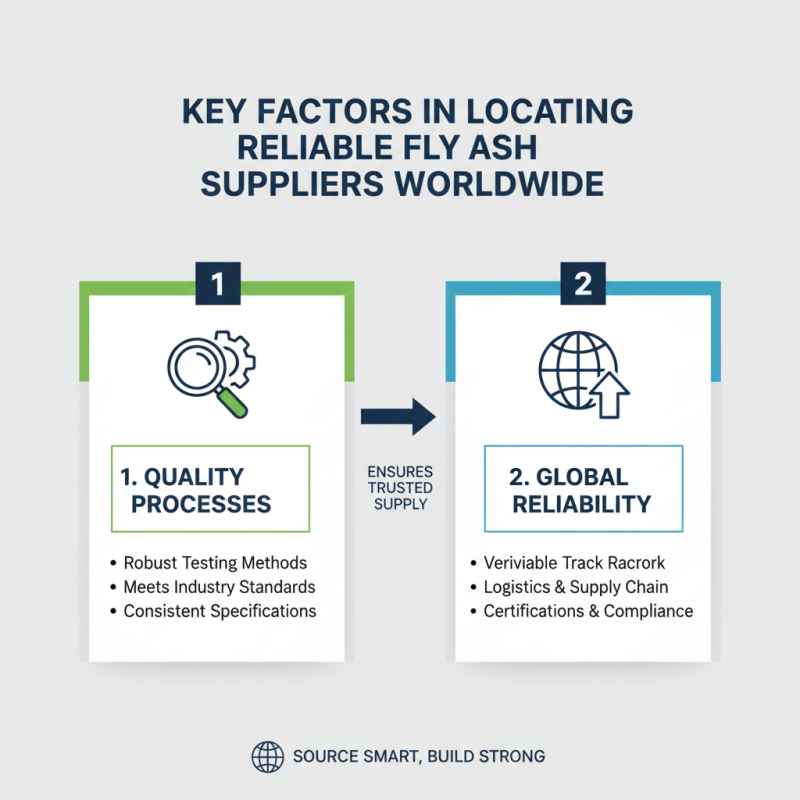
When sourcing fly ash, consider its physical properties. Particle size, shape, and surface area impact performance in concrete mixes. Some suppliers may offer varying quality levels. Review certifications and testing reports to ensure compliance with relevant standards. Awareness of geographic limitations is also critical. Local availability can affect costs and sourcing options.
Keep in mind the ongoing debates around environmental impact. The production and use of fly ash raise questions about sustainability. Assess your sources carefully. Transparency in supply chains can enhance reliability. Engage with suppliers who prioritize eco-friendly practices. The journey to source fly ash is complex, but understanding these nuances offers a competitive edge in the market.
Evaluating Quality and Specifications of Fly Ash for Different Uses
When sourcing fly ash, evaluating its quality and specifications is critical. Fly ash is commonly used in construction materials, but not all sources provide the same performance. First, examine the physical and chemical properties. The fineness, specific gravity, and chemical composition can significantly affect how it interacts in various applications.
Understanding the required standards for your specific use is vital. Different projects may necessitate distinct performance criteria. For example, concrete mixes often require fly ash with a low calcium content. This can enhance durability and reduce cracking over time. On the other hand, high-calcium fly ash might be beneficial in soil stabilization.
Another aspect to reflect on is the source of the fly ash. Variability from different coal combustion processes can lead to inconsistencies. Testing samples from suppliers can ensure they meet your specifications. While most suppliers provide certifications, not all are reliable. Establishing a robust quality control process is essential for consistent results in construction projects.
Top 5 Tips for Sourcing Fly Ash in the Global Market
| Tip |
Description |
Key Metrics |
Recommended Use |
| 1. Assess the Chemical Composition |
Analyze the silicon, aluminum, and iron content to ensure suitability for your specific application. |
SiO2: >30%, Al2O3: >20%, Fe2O3: <10% |
Cement, Concrete |
| 2. Evaluate Physical Properties |
Check the fineness and density to determine the quality and performance in concrete mixes. |
Fineness: >400 m²/kg, Density: 1.8 g/cm³ |
High-performance Concrete |
| 3. Check for Environmental Compliance |
Ensure that the fly ash meets regional environmental standards to avoid any legal issues. |
Regulatory Agency Certifications |
Municipal Projects |
| 4. Analyze Carbon Content |
Lower carbon content leads to better performance in concrete mixtures. |
Carbon Content: <5% |
Structural Applications |
| 5. Validate Supplier Credentials |
Research and validate the credentials of suppliers for reliability and quality assurance. |
Supplier Certification, Customer References |
Long-term Contracts |
Navigating Regulatory Compliance for Fly Ash Sourcing Across Regions
Sourcing fly ash in a global market requires careful navigation of regulatory landscapes. Each region has its own compliance requirements that can vary widely. For example, in the United States, the Environmental Protection Agency (EPA) oversees the use of fly ash as a construction material. In contrast, the European Union has stringent guidelines to ensure environmental protection and consumer safety.
Understanding these regulations is crucial for success. A report by the World Coal Association indicates that about 50% of coal-fired power plants worldwide produce fly ash. However, only a fraction of this is used correctly due to lack of awareness about local compliance. Failure to meet regulatory standards can lead to severe penalties and project delays.
Many suppliers underestimate the importance of thorough documentation. Proper certifications are essential for each batch of fly ash. This documentation should include test results and compliance declarations that support its suitability as a supplementary cementitious material. Neglecting this aspect can undermine project integrity and lead to quality concerns.
Global Fly Ash Sourcing Trends
This bar chart represents the sourcing volumes of fly ash from various regions in 2023, highlighting key markets and their contributions to the global supply.
Building Strong Relationships with Suppliers for Sustainable Sourcing
Building strong relationships with suppliers is essential for sustainable sourcing of fly ash. The global demand for fly ash is projected to reach 100 million tons by 2025, driven by the growth of green construction practices. This highlights the need for reliable suppliers who can meet quality and quantity requirements consistently.
To foster these relationships, proactive communication is key. Regular updates on market conditions and potential challenges can help both parties prepare better. A study by the American Concrete Institute revealed that nearly 70% of buyers value transparency in their supply chain. This trust-building aspect plays a significant role in ensuring long-term partnerships.
Moreover, understanding supplier capabilities is crucial. Some suppliers may lack the technology to provide high-quality fly ash consistently. It is advisable to perform thorough assessments of these suppliers. Seek certifications that demonstrate their adherence to environmental and quality standards. Establishing metrics for performance review can help ensure that the relationship remains beneficial for both sides. Reflecting on your supplier choices can lead to improvements in sourcing strategies.